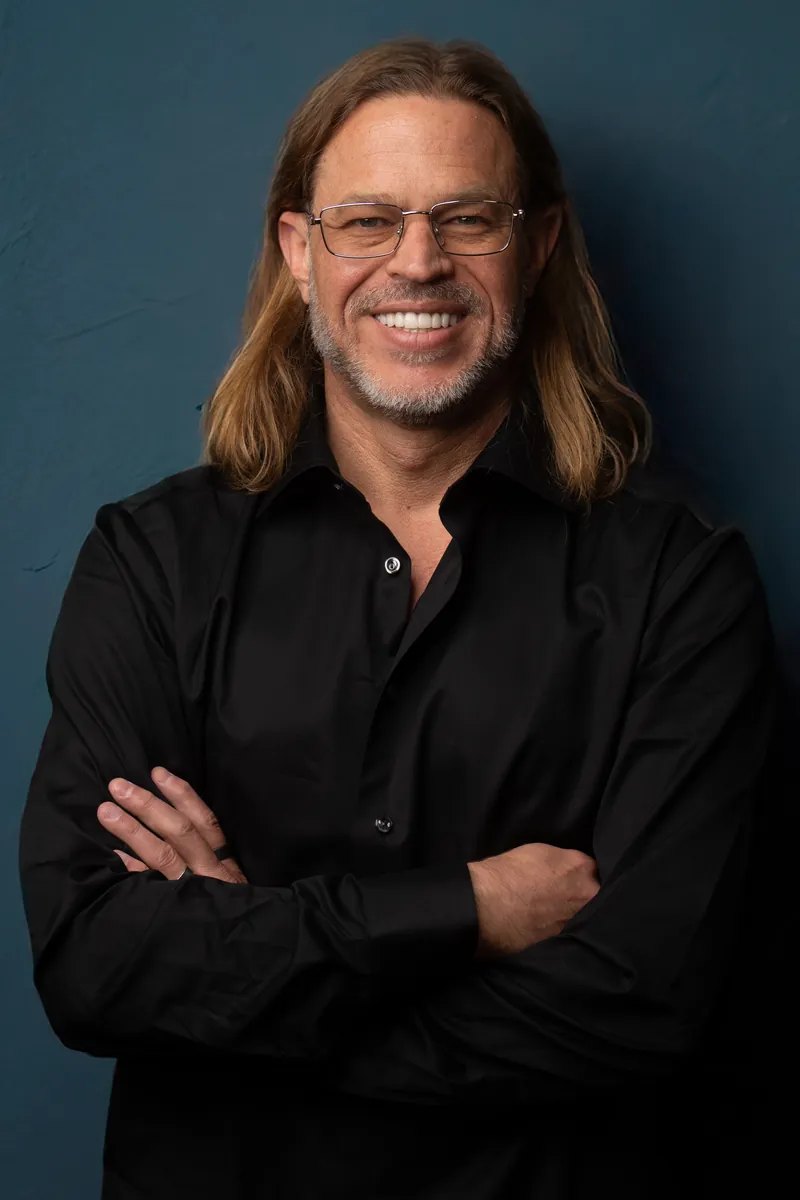
Email sequence · Pre-webinar

From registration to the live room

Fourteen emails that get a registered physician to The Destination Practice Masterclass on Thursday, October 29, sure it's worth the evening.

  • 14 emails
  • Registration to live
  • Thu, Oct 29 · 7:00 PM ET
01 / 14First emailRegistration + 0 min
Dr. Robert Whitfield <rob@drrobertwhitfield.com>
to {EMAIL}

See you Thursday, Oct 29 at 7 PM ET

PreviewWhere to join, the time in your zone, and where to grab the 50-Question Bank.

Hey {FIRST NAME},

You're registered for The Destination Practice Masterclass.

It's live on Thursday, October 29 at 7:00 PM ET (6:00 PM CT) and runs about 75 minutes. Join here: [WEBINAR LINK]

Put it in your calendar now, because a Thursday evening fills up fast after a full day in clinic: [CALENDAR LINK]

I also made you something. It's called the 50-Question Bank, a fill-in sheet of the 50 questions patients ask before they book, sorted by stage. Fill it in once and you've got enough to film a month of videos in one afternoon.

I'm not sending it by email. It's waiting for you in the private group for physicians who registered, along with the reminders on the night: [GROUP LINK]
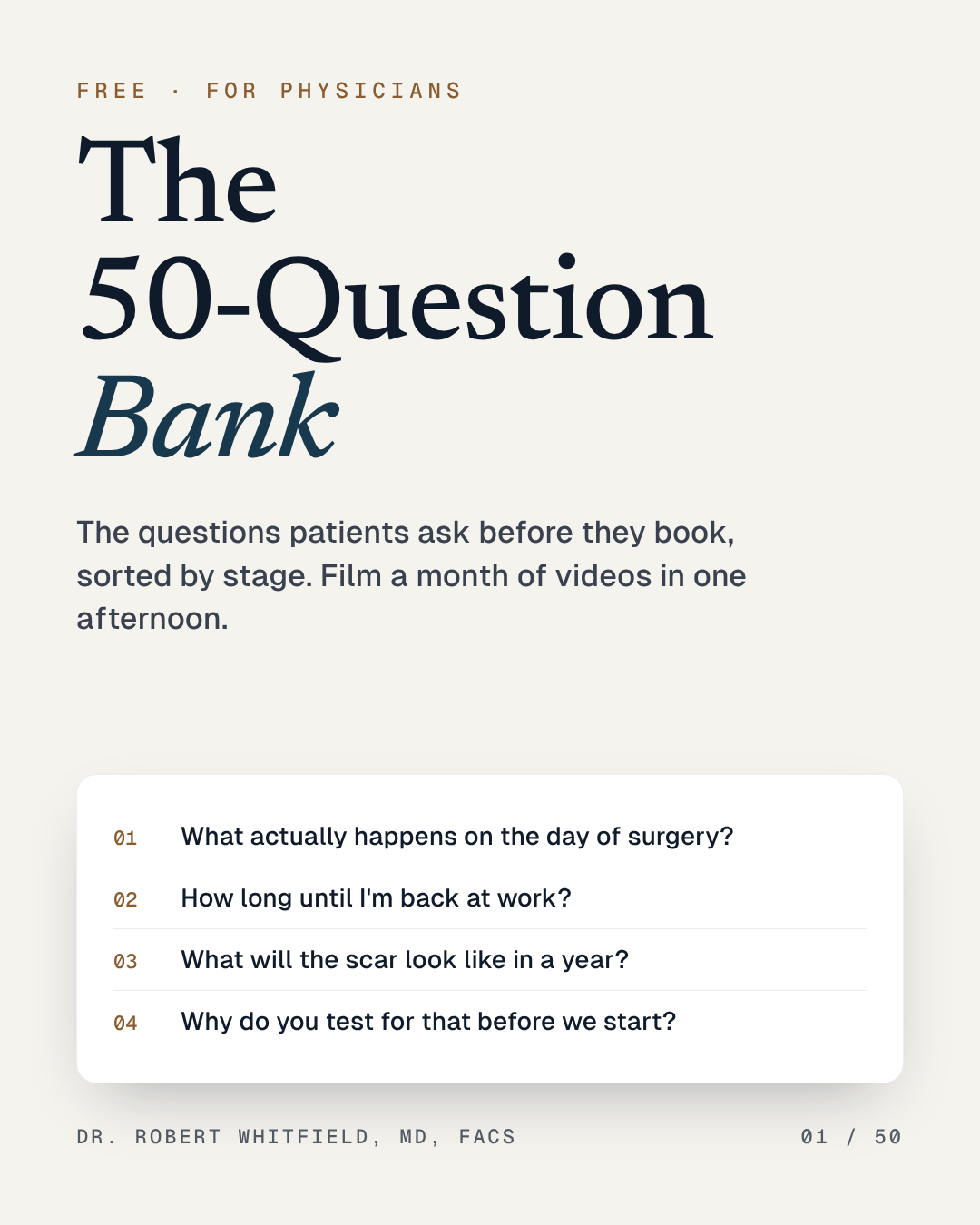
The 50-Question Bank · inside the private physicians' group

On the 29th I'm going to show you three things:

  1. How to film a month of patient videos in one afternoon. Using the questions you already answer in every consult, so you never stare at a blank camera.
  2. The long-form format that has patients flying in from 40+ states. Why ten-minute answers beat thirty-second trends for a medical practice, and the title rule behind 35M+ views.
  3. How a viewer becomes a booked consult without you on the phone. The discovery-call path your team runs, so you only meet patients who've already chosen you.

See you on Thursday night.

- Dr. Rob

P.S. In a few minutes I'll send you the short version of how my channel actually works. It has very little to do with going viral.
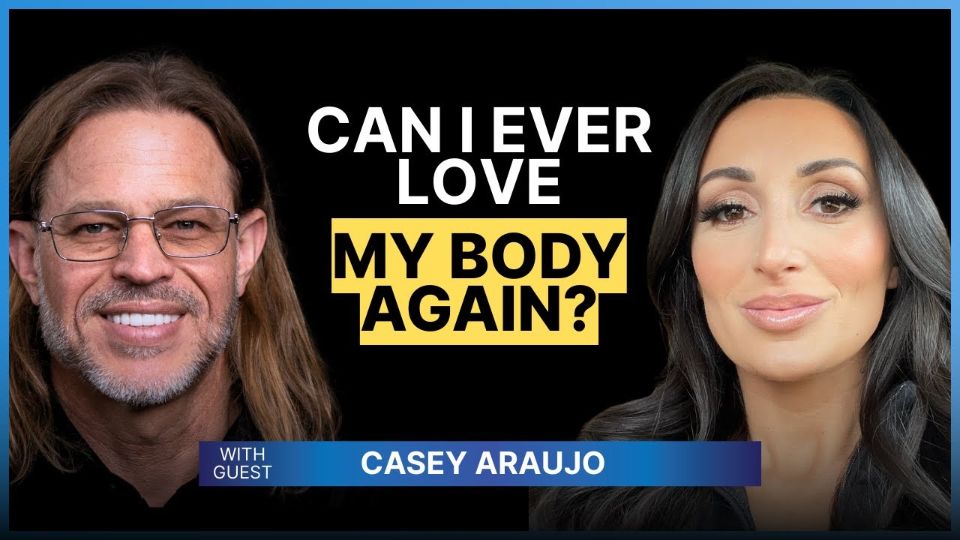
02 / 14Q1 · The mechanismRegistration + 25 min
Dr. Robert Whitfield <rob@drrobertwhitfield.com>
to {EMAIL}

What 4,500 videos have in common

PreviewAlmost every one of them is a patient's question, answered properly.

Hey {FIRST NAME},

People assume my YouTube channel is a marketing project. It's closer to a very long consult.

There are about 4,500 videos on it now, and nearly every one starts with a question a patient asked me. Are my implants causing chronic fatigue? Will I wake up after anesthesia? How do I sleep after surgery?

I answer those questions on camera the same way I'd answer them across the desk. Properly, in long form, with the science, the plan and the support. Sometimes that takes ten minutes and sometimes it takes an hour.

That's the whole idea behind what I call the Answer Engine. You film the questions your patients already ask, you answer them properly in long form, and a discovery call your team runs turns the people who watched into consults.

There are no trends in it and nobody's dancing. It's long answers to real questions.

The channel has 1.98 million subscribers today, and patients fly in to Austin from more than 40 states. I didn't get there by being clever on camera. I got there by answering the question a patient searches for late at night, after she's been told her symptoms are all in her head.

On Thursday I'll show you how the three pieces fit together for your specialty, starting with how to film a month of patient videos in one afternoon.

- Dr. Rob

P.S. Next, the question most doctors ask me first: how does a ten-minute video turn into a booked consult?

03 / 14Q1 + Q2 · How it paysRegistration + 45 min
Dr. Robert Whitfield <rob@drrobertwhitfield.com>
to {EMAIL}

The video that keeps working after you've gone home

PreviewA trend is gone by Friday. An answer keeps getting found.

Hey {FIRST NAME},

A trend video lives for about two days. It gets pushed to people who weren't looking for it, they swipe past, and that's the end of it.

A long-form answer works differently. It sits on your channel and gets found by the exact person searching for that question, in the week she's deciding what to do about it.

My most-watched video is a conversation about gut issues with Kyle Landry PhD, and it has 6 million views. "The Inflammatory Clues Your Doctor Is Missing" has 2.8 million. Those didn't come from an algorithm getting lucky on a Tuesday. They came from people with a real problem typing it into a search bar.

That's the first half of the economics. You film an answer once and it keeps getting found.

The second half is what happens when that viewer reaches out. By the time she books, she may have spent hours with you. She knows how you think, how you talk and what you'd likely recommend. She isn't comparing you with the surgeon down the road on price, because she's already decided she wants you.

That's why those consults feel so different, and it's why patients are willing to travel to see a doctor whose thinking they already know.

On Thursday I'll walk you through the format behind those numbers, including the title rule behind 35M+ views, so you can see how it would work in your own specialty.

- Dr. Rob

04 / 14Q3 · Founder storyRegistration + 75 min
Dr. Robert Whitfield <rob@drrobertwhitfield.com>
to {EMAIL}

I kept giving the same answers in every consult

PreviewSo I started giving them to a camera instead.

Hey {FIRST NAME},

I'm a board-certified plastic surgeon in Austin. Most of my work is breast implant removal, en bloc capsulectomy and helping women recover from breast implant illness.

In almost every consult I'd explain what's actually in the capsule, whether symptoms tend to improve and what recovery looks like week by week, and then I'd explain it all again to the next patient.

At some point it clicked that if I was going to say it in every consult anyway, I could say it once on camera, say it properly, and let the patient hear it before she ever sat down in my office.

So I started answering patient questions on video. I'd take one question and give the honest, complete answer, the same one I'd give in the exam room.

That habit is now 4,500 videos and 1.98 million subscribers, a podcast with more than 180 episodes, and a free Thursday livestream called Dr. Rob's Circle. Patients fly in from more than 40 states, and the practice holds a 5.0 rating from 153 patient reviews.

A lot of medicine still isn't listening to the questions patients actually ask. I built a practice by answering them.

I'm telling you this because none of it required me to be good at social media. It required me to do on camera what I was already doing in the exam room, and you already do that every day.

That's what Thursday is about.

- Dr. Rob

P.S. Coming up, the question I hear from almost every physician before the masterclass: where am I supposed to find the time?

05 / 14Q3 · Time objectionRegistration + 3 h 15 min
Dr. Robert Whitfield <rob@drrobertwhitfield.com>
to {EMAIL}

One afternoon a month

PreviewWhat this actually takes for a doctor with a full clinic schedule.

Hey {FIRST NAME},

I can guess what's going through a lot of your heads, because I'd think it too. "This sounds fine for someone with a production team, but I'm in clinic all week and I chart at night."

That's fair, so let me tell you what it actually takes.

You don't film every day. You film one afternoon a month.

You sit down with the questions your patients already ask, the ones you could answer half asleep, and you record a batch of answers back to back. One afternoon gives you a month of videos because you're not inventing anything. You're saying what you already say in consults.

Then you stop. Someone else edits, titles and uploads. Your team runs the discovery calls, and you meet the patients who've already chosen you.

Most doctors try the opposite. They take on a posting schedule built for full-time creators, it eats their evenings, and after a few weeks they decide social media isn't for them.

The first pillar on Thursday is exactly this: how to film a month of patient videos in one afternoon. I'll show you how I turn a list of questions into a filming day, so you never stare at a blank camera.

If you haven't grabbed the 50-Question Bank from the physicians' group yet, it's the first step of that: [GROUP LINK]

- Dr. Rob

06 / 14Q4 · Case studySun, Oct 25 · 10:00 AM ET (4 days out)
Dr. Robert Whitfield <rob@drrobertwhitfield.com>
to {EMAIL}

890,000 people watched Casey's story

PreviewWhat a single long-form story does that a clip can't.

Hey {FIRST NAME},

One of the most-watched videos on my channel isn't really me talking. It's Casey.

Chronic Inflammation: Casey's Journey to Total Recovery · 890K views

Casey sat down with me and talked through her chronic inflammation and her road to recovery, in her own words, from the start to the end. It's a long video and nobody cut it into a thirty-second highlight. 890,000 people have watched it.

Think about who those people are. Most of them aren't scrolling for entertainment. They're women living with symptoms a lot like Casey's, and they stayed for the whole conversation because it was about them.

That's what a long-form story does for a practice. A thirty-second clip might get a like. A woman who's just watched the whole of Casey's story comes away knowing how I think, how I treat people and whether I'm the surgeon she wants.

You don't need a guest list or a studio for this. You need patients who are willing to tell their story, the right consent in place, and a format that gives them room to talk.

On Thursday I'll show you the long-form format behind videos like Casey's, and why ten-minute answers beat thirty-second trends for a medical practice.

- Dr. Rob

P.S. If you'd like to watch it before Thursday, it's on my channel as "Chronic Inflammation: Casey's Journey to Total Recovery".

07 / 14Q1 · The reframeMon, Oct 26 · 9:00 AM ET (3 days out)
Dr. Robert Whitfield <rob@drrobertwhitfield.com>
to {EMAIL}

Doctors were never bad at social media

PreviewYou were told it means something it doesn't.

Hey {FIRST NAME},

Most doctors I talk to have tried social media at least once.

A practice manager suggests it, or an agency pitches it, or someone's nephew sets up a social account. There are a few weeks of trending audio, a dance the front desk talks you into and a before-and-after carousel. You get a few hundred views, a couple of comments from people in other countries, and no new consults.

So the conclusion is that you're bad at this, or that patients don't choose doctors from the internet.

Neither is true. It was never that doctors are bad at social media. Doctors were told social media means trends. Patients don't book from trends. They book from answers.

Think about how you'd choose a surgeon for your own family. You wouldn't pick the one with the best transition video. You'd pick the one who explained the procedure so clearly you stopped worrying. Your patients do the same thing, and more and more of them do it on video before they ever call your office.

The doctors who answer those questions get chosen. The ones chasing trends don't show up when a patient searches at all.

On Thursday I'll show you what to make instead, and how to make it without turning into a content creator.

- Dr. Rob

08 / 14Q2 · The title ruleTue, Oct 27 · 9:00 AM ET (2 days out)
Dr. Robert Whitfield <rob@drrobertwhitfield.com>
to {EMAIL}

Are your implants causing chronic fatigue?

PreviewWhy that title has 1.8 million views, and what it says about yours.

Hey {FIRST NAME},

That subject line is the title of one of my videos. It has 1.8 million views.

It isn't clever. There's no shock in it and no emoji. It's the question, in the words a patient would actually type.

That's the second layer of this, and it's the part most doctors miss even after they've decided to do long-form. They film a good answer and then title it like a grand rounds lecture. "Understanding Capsular Contracture: An Overview." Nobody has ever searched for that.

Here are a few more titles from my channel:

  • "The Inflammatory Clues Your Doctor Is Missing" · 2.8M views
  • "Mold Lyme and Breast Implants: Are They Connected?" · 1.8M views
  • "The Surprising Link Between Implants and MCAS Symptoms" · 941K views

Every one of them is a question or a worry a patient already has, said the way she'd say it. The answer inside can be as detailed and clinical as it needs to be. The title only has to use the words she'd use.

There's more to it than that, like how long the answer should run, how you open, and how you hold people through an hour-long conversation. I'll walk through all of it on Thursday in the second pillar, the long-form format that has patients flying in from 40+ states.

For now, try this. Think of the last question a patient asked you twice in one week and write it down exactly the way she said it. You've just written a title.

- Dr. Rob

P.S. Tomorrow I'll take on the concerns I hear most from physicians, including the one about looking unprofessional.

09 / 14Q3 · Objection FAQWed, Oct 28 · 9:00 AM ET (34 h out)
Dr. Robert Whitfield <rob@drrobertwhitfield.com>
to {EMAIL}

Let me guess what you're thinking, Dr. {LAST NAME}

PreviewLooking unprofessional, compliance, and "my specialty is different".

Hey {FIRST NAME},

I hear the same few concerns from almost every physician before a masterclass like this one, so I'll answer them here.

"I don't want to look like an influencer."

Neither do I. Watch any of my videos and you'll see a surgeon explaining something carefully, usually sitting still. Long-form answers read like medicine, not marketing. The doctors who end up looking unprofessional online are the ones doing trends, not the ones teaching.

"What about HIPAA and my board?"

Education is the safest content you can make, because you're explaining conditions and procedures in general terms, not discussing a patient. When a patient does tell her story, it's with proper consent and a release, and I'll show you how we handle that. You'll still want your own counsel to look over anything you use.

"My specialty is different."

It might be, in the details. But every cash-pay specialty has patients with questions they're nervous to ask, and every one of those questions gets searched. Dermatology, orthopedics, fertility, functional medicine and dentistry all work the same way here, because the format doesn't care what the question is about.

"I'm not comfortable on camera."

Almost nobody is at first. You're comfortable explaining things to patients, though, and that's all this is. After a couple of filming afternoons it gets much easier.

"Is this going to be a sales pitch?"

Thursday is a teaching session. I'll go through the three pillars properly, with real examples from my channel, and you'll leave with a plan you can use either way.

See you Thursday at 7 PM ET: [WEBINAR LINK]

- Dr. Rob

10 / 14Q4 · PrepWed, Oct 28 · 6:00 PM ET (day before)
Dr. Robert Whitfield <rob@drrobertwhitfield.com>
to {EMAIL}

Quick note before tomorrow night

PreviewTwo things to bring so you leave with your first filming list.

Hey {FIRST NAME},

Tomorrow at 7 PM ET we go live, so here's a quick note to help you get the most out of it.

Bring a notepad, or open a blank note on your phone. During the first pillar I'm going to ask you to write down the questions your patients ask most, and you'll want somewhere to put them.

If you've filled in the 50-Question Bank from the physicians' group, bring that too. You'll be ahead of almost everyone in the room.

Block the full 75 minutes if you can. The third pillar, how a viewer becomes a booked consult without you on the phone, comes near the end, and it's the part that makes the first two pay off.

See you there: [WEBINAR LINK]

- Dr. Rob

11 / 14Alignment · AgendaThu, Oct 29 · 9:00 AM ET (morning of)
Dr. Robert Whitfield <rob@drrobertwhitfield.com>
to {EMAIL}

Tonight at 7 PM ET

PreviewWhat we're covering tonight.

Hey {FIRST NAME},

The Destination Practice Masterclass is tonight at 7:00 PM ET (6:00 PM CT).

Here's what we're covering:

  1. How to film a month of patient videos in one afternoon. Using the questions you already answer in every consult, so you never stare at a blank camera.
  2. The long-form format that has patients flying in from 40+ states. Why ten-minute answers beat thirty-second trends for a medical practice, and the title rule behind 35M+ views.
  3. How a viewer becomes a booked consult without you on the phone. The discovery-call path your team runs, so you only meet patients who've already chosen you.

I'll be on a few minutes early. Come say hi in the chat and tell me your specialty, because I'll use real examples from the people in the room.

Join here: [WEBINAR LINK]

- Dr. Rob

12 / 14One hour outThu, Oct 29 · 6:00 PM ET (1 h before)
Dr. Robert Whitfield <rob@drrobertwhitfield.com>
to {EMAIL}

We start in an hour

PreviewBring the question you most want answered.

Hey {FIRST NAME},

We go live in one hour.

If something's come up at the clinic, I understand. Join from your phone if you need to. The first pillar is the one that gets you filming, so try not to miss the start.

I'll take questions live at the end, so bring the one you most want answered.

Join here: [WEBINAR LINK]

- Dr. Rob

13 / 14Live nowThu, Oct 29 · 7:00 PM ET (live)
Dr. Robert Whitfield <rob@drrobertwhitfield.com>
to {EMAIL}

We're live

PreviewCome on in, we're just getting started.

Hey {FIRST NAME},

The Destination Practice Masterclass is live right now.

Join here: [WEBINAR LINK]

Say hi in the chat when you get in and tell me your specialty.

- Dr. Rob

14 / 14Late joinersThu, Oct 29 · 7:15 PM ET (+15 min)
Dr. Robert Whitfield <rob@drrobertwhitfield.com>
to {EMAIL}

Fifteen minutes in, and you're right on time

PreviewWe're just getting into the first pillar.

Hey {FIRST NAME},

We started fifteen minutes ago, and you haven't missed anything you can't catch up on.

I'm just getting into the first pillar, how to film a month of patient videos in one afternoon.

Jump in now: [WEBINAR LINK]

- Dr. Rob